![[Image Description: Two MCC members are walking away on a rocky trail, carrying their packs, surrounded by burnt orange bushes. Through the haze in the background, there are a multitude of mountains, overlapping one another.]](https://cdn.firespring.com/images/7ba12407-5e3a-41c1-b4b4-f00aac9d37a1.jpg)
Service has been a defining value for Americans. In joining the Continental Army at the onset of the American Revolution, Nathan Hale reflected “I wish to be useful, and every kind of service necessary to the public good becomes honorable by being necessary.”
Lincoln called the nation to service with his 1863 Gettysburg Address - a call to all generations of Americans: “It is for us, the living [...] to be dedicated here to the unfinished work” - the work of creating a more perfect union under a government “of the people, by the people and for the people.”
With his 1961 inaugural speech, John F. Kennedy inspired a new era of service. His call: “Ask not what your country can do for you – ask what you can do for your country,” seeded the creation of the Peace Corps, VISTA (Volunteers in Service to America), and later, AmeriCorps.
This American ethic of service informed philosopher, William James’ 1910 essay, “The Moral Equivalent of War.” In this essay, James proposed to enroll young people into “service against nature” as a means to build character and social consciousness while benefiting society without the destruction of war. This vision for purposeful national service found expression in the Civilian Conservation Corps (1933-42) which helped lift the nation from the ravages of the Great Depression and Dust Bowl. Over nine years, Roosevelt’s Tree Army enrolled 3 million, mostly young men, in service FOR nature, building the infrastructure of our country’s parks and forests and working lands while building the hope and character of those earliest Corps Members.
It seems, every 30 years in modern history - from James’ 1910 essay, to the CCC of the 30’s, to Kennedy’s call to service in the 60’s, and the launch of AmeriCorps in 1994 - we are inspired by a renewal of this nation’s commitment to public service where “every kind of service necessary to the public good becomes honorable by being necessary.”
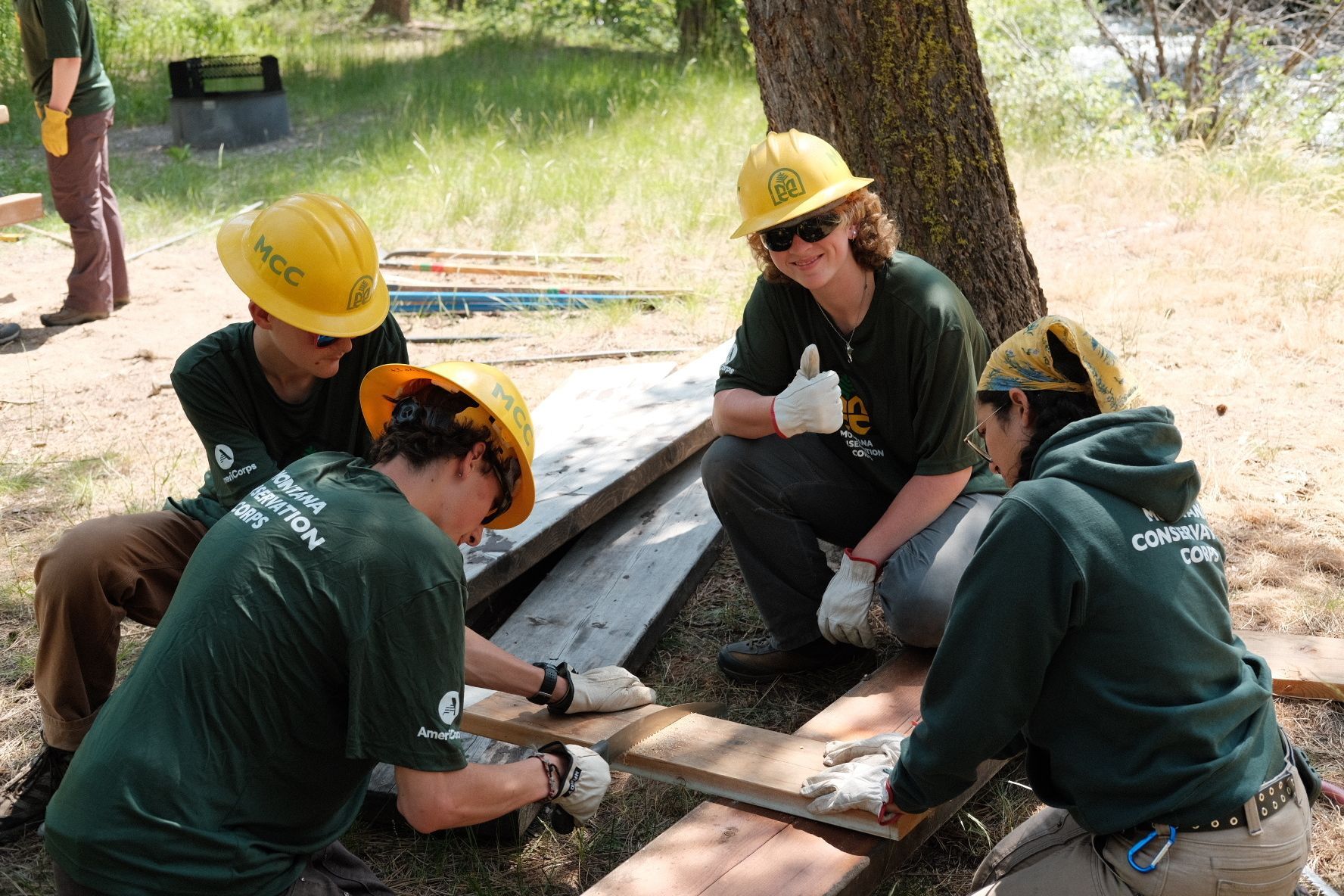
Montana Conservation Corps was born of this tradition in 1991. And now, in our 35th year, we carry these honorable traditions forward. As we reflect on the state of our nation in 2026, can there be any better way to rekindle our nation’s character and social consciousness, our commitment to public good and honor, than to recommit ourselves to the “unfinished work” to create a more perfect union?
Follow us this year in upcoming Pathways newsletters as we explore MCC’s Eras of Service. The 500 young people who will serve with MCC this year are stepping up to their role in service. How will you serve?