![[Image Description: Two MCC members taking a brief break; one is sitting on a rock, the other is standing nearby. They are both in their uniforms, looking out at the expansive, mountain view surrounding them.]](https://cdn.firespring.com/images/c3f85e97-43a9-4810-8081-e8e6338173d0.jpeg)
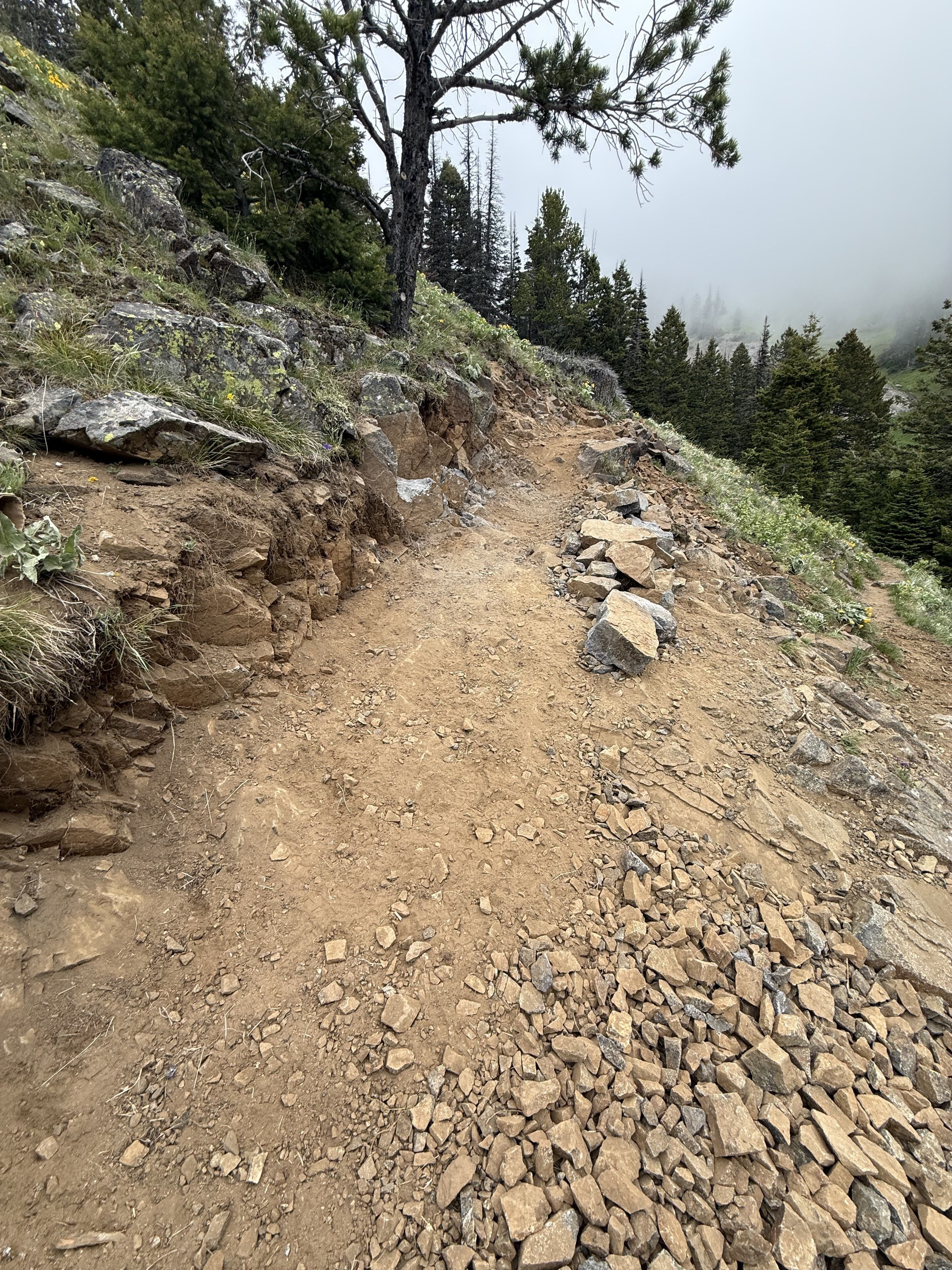
While the very popular Middle Cottonwood Trail at the foot of the Bridger Mountains doesn't need an introduction to the local Bozeman population, this MCC crew spent their hitch "blowing it up" to make it even safer and more accessible for all users.
While the traditional trail work is done using different tools such as pick-axes, pulaski's, and McLeods you can run into problems when you find a trail that consists of a lot of very big and very heavy rocks. When that is the case you start bringing out the rock tools like the sledge hammers and rock bars. While those tools are super effective when used properly, sometimes you look at a rock on the trail and you immediately know that's not going to be moved with what we have at our disposal.
When that happens, you step up your tool game even more. And when our crew of six found out that we would be learning how to use the micro blaster for our work this hitch, the collective excitement was one of the coolest things I've seen in my two seasons with MCC.
The Micro Blaster is a portable demolition tool that you can carry in a case that is about the size of a briefcase. When we came up on rocks in the trail that were too much to handle with our hand tools, we brought the micro blaster into play. First, we would use a hammer drill to drill holes in the part of the rocks that we wanted to break up. Next, we would use little wire brushes and hole cleaning air tubes to clear the drilled holes of as much debris as we could to make it as accessible as possible. Then we would drop these charges into the hole that were about the size of a cigarette and filled with gunpowder and these are what makes the whole operation blast. Once inserted, we would then place the micro blaster head in the hole on top of the charges. This head is attached to a about 30 foot tube that has a pressurized CO2 tank hooked up to the other end of it. Once, we had radio confirmation that the trail was clear of hikers from our spotters, it was blasting time! We would click a button on that CO2 tank and it just used pressurized air to initiate the system, and boom there goes the rock all blown up now that we wanted off the trail!
We spent much of our time on this hitch working on making this one switchback section of the trail a lot more accessible and used the micro blaster dozens of times to get that job done as best as we could. We would blow up rocks, sledgehammer rocks, and then get to safely remove them all from the trail.
While it could become frustrating at times and have hiccups like any other power tool, the blaster made our work infinitely easier and we can't wait to get right back on this trail the next hitch and pick up where we left off, with continuing to make one of the most popular trails in Bozeman also one of its safest.