
![[Image Description: Two MCC members taking a brief break; one is sitting on a rock, the other is standing nearby. They are both in their uniforms, looking out at the expansive, mountain view surrounding them.]](https://cdn.firespring.com/images/c3f85e97-43a9-4810-8081-e8e6338173d0.jpeg)
Beneath towering western larches and ashore the glossy waters of Seeley Lake sits the historical Camp Paxson - an outdoor education haven constructed by the Civilian Conservation Corps. Over 80 years later, its intended purpose still thrives with users such as the Montana Conservation Corps.
The Western Wildlands office congregated at Camp Paxson for the first week of the season. Along with policy discussions, wilderness first aid and sawyer training, the camaraderie ensued. We canoed, Hobbit-walked, bowed to Gus (the world’s largest larch tree), and learned one another’s name through alliterative adjectives. Mind the reader, I’m known around these parts as Meticulous Max.
There, we received our crew assignments for the season, closely resembling a sports team. We all take turns cooking dinner and washing dishes for our seven-person crew, and are assigned specific camp roles to ensure safety and sufficiency. Whether it’s pad thai, taco bowls, or parmesan-garlic orzo, don’t underestimate the culinary skills of a hungry crew with a camp stove.
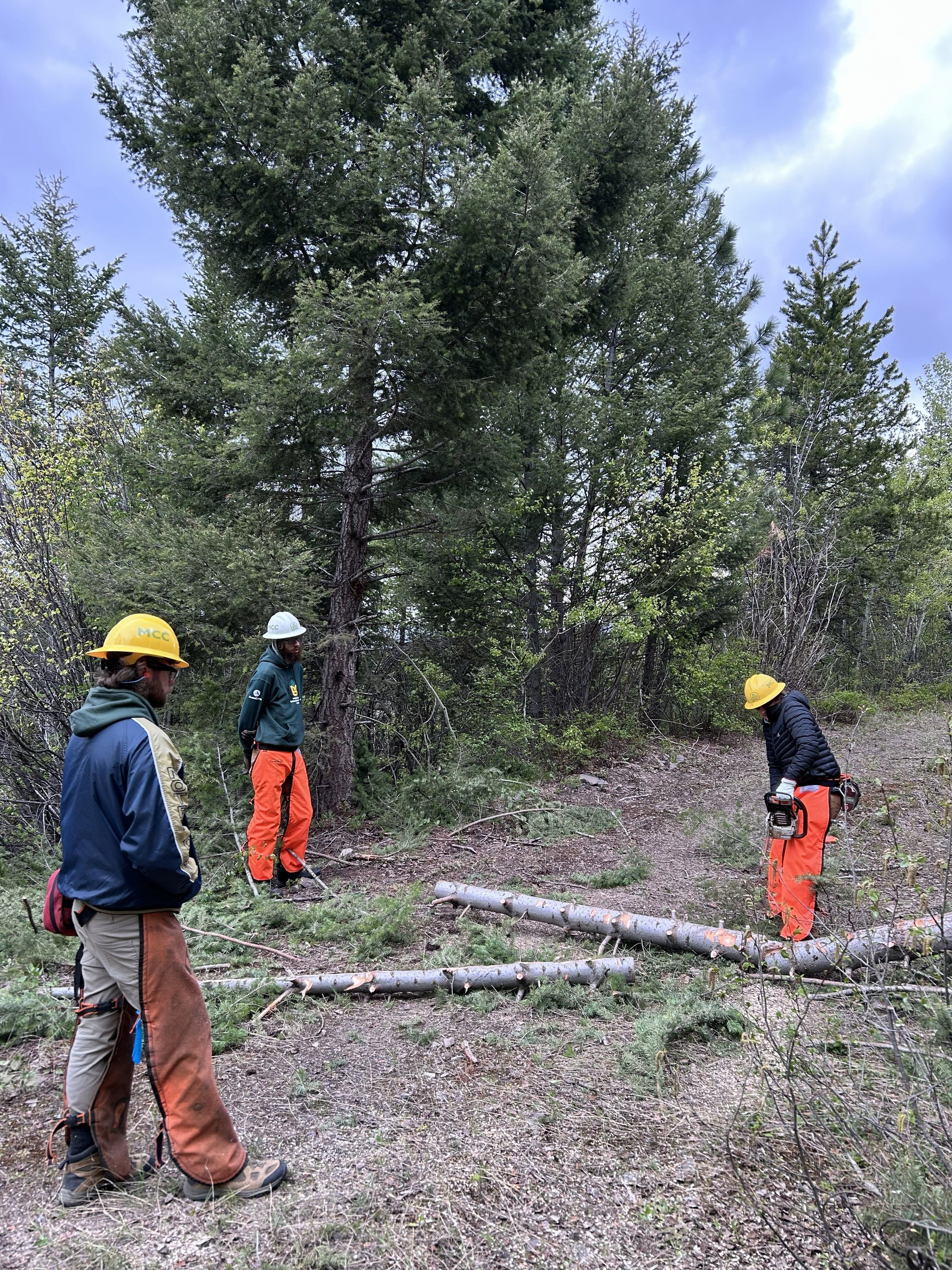
This past week, our crew travelled to MPG Ranch near Florence, where we learned more about chainsaw safety and fundamentals. Several of our crewmembers hadn’t touched a chainsaw before, but that didn’t matter. MCC staff effectively instructed chainsaw fundamentals - the five-point safety check, ergonomics, limbing, bucking, and slashing.
So, why are we cutting down these seemingly healthy trees?
Long ago, logging companies deforested the area, which was populated with ponderosas and larches - both native to the region. In turn, Douglas firs grew, and are more susceptible to wildfire spread, therefore threatening the former trees’ well-being. By slashing, limbing, and bucking such trees, we’re promoting the growth of native species.
Although at times repetitive, this work is enlivening. The chainsaw is an extension of the operator - of their decisions and their body. With that, users reap immediate gratification from their work, not only by felling a tree, but by understanding the far-reaching effect of such an action.
There’s a lot of work to be done these next few months, and may the initial adversity we faced evolve into adjustments we make for a healthy and unforgettable season for everyone involved.