
![[Image Description: Two MCC members taking a brief break; one is sitting on a rock, the other is standing nearby. They are both in their uniforms, looking out at the expansive, mountain view surrounding them.]](https://cdn.firespring.com/images/c3f85e97-43a9-4810-8081-e8e6338173d0.jpeg)
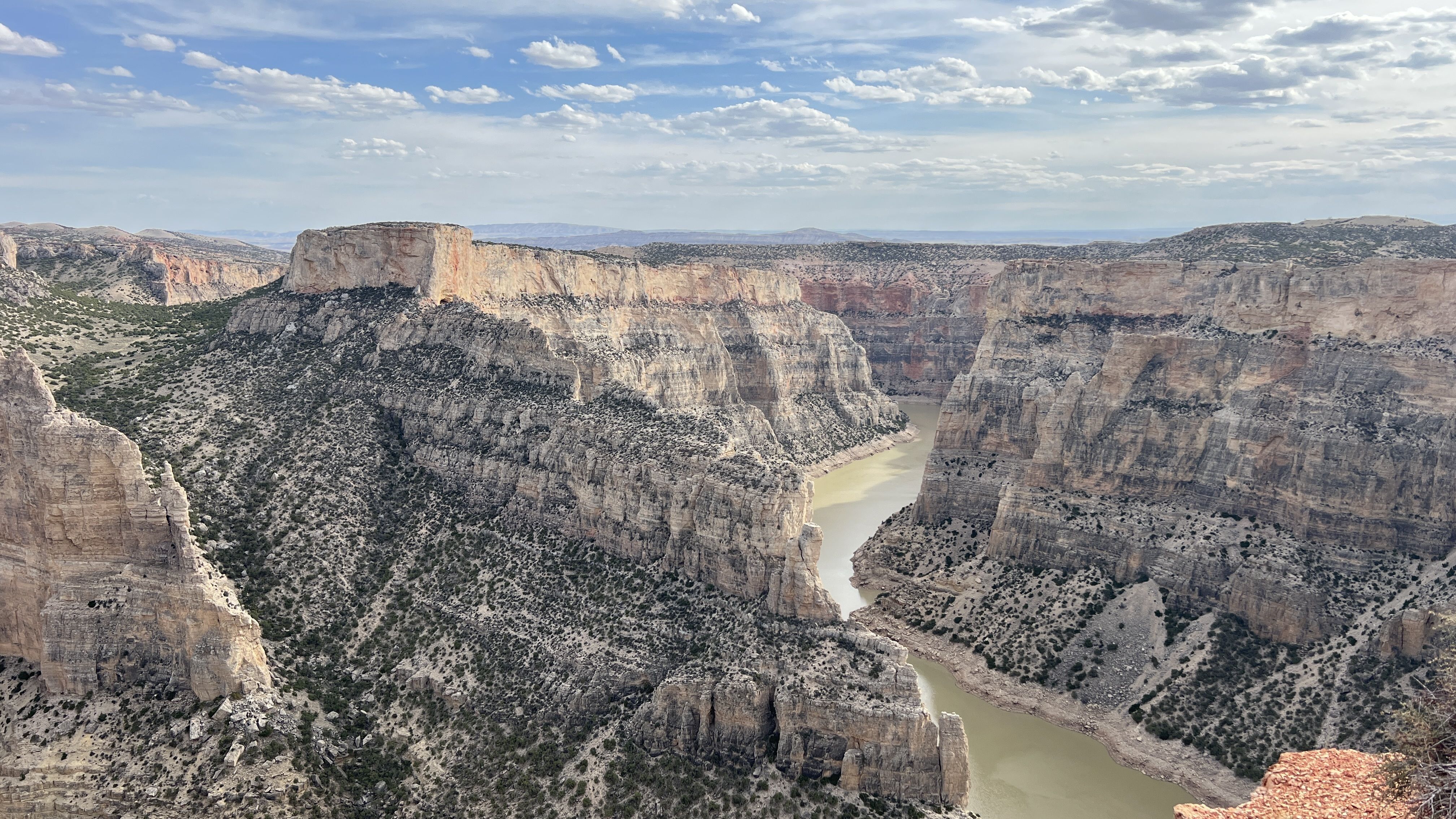
Bighorn Canyon doesn’t ease you in. It shifts without warning. 80-degree heat collapsing into wind that won’t let up, then rain, then a cold snap that brings snow arriving out of nowhere. Our work moved the same way: cutting through dense stands of Russian olive, moving huge cottonwood logs off of trails, then building over a thousand feet of fence.
It’s repetitive, physical work—slow progress measured in felled trunks, cleared banks, and sore muscles at the end of the day; knowing every pass was part of a longer fight, but the work doesn’t finish in a single season. Out here, conservation isn’t just a backdrop to the landscape, it’s the labor stitched into it, one weather-beaten hour at a time.
“If we can remove the Russian olives now, we won’t have to replant native species, and the system has a chance to rebound.”
— Wyoming Game and Fish Department biologist, Willow Hibbs